Water Extraction in Sierra Madre, CA
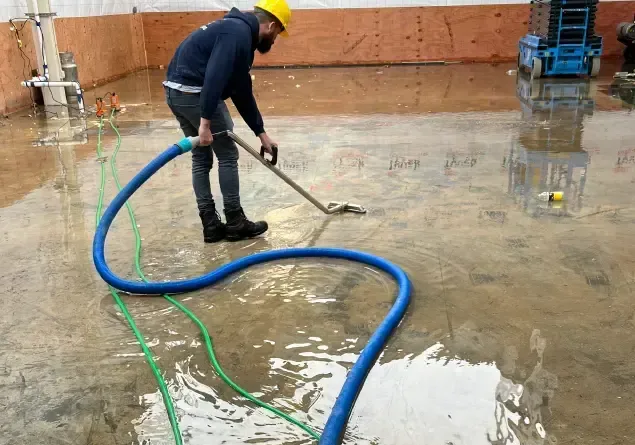
Water left on a floor keeps climbing into the subfloor and the bottom of the walls. The extraction crew removes it with submersible pumps and weighted wands, so drying can begin on surfaces that are still sound.
(888) 578-6508 Water standing in the house? Call for pumps- Submersible pumps
- Weighted carpet wands
- Moisture checked after
First steps when water extraction and removal shows up
- 1Check the water depth
Note how deep the water is and which outlets sit near it before anyone steps inside.
- 2Shut off the source
Close the valve or stop the leak so the pumps are not fighting new water.
- 3Lift small items
Raise rugs, boxes and electronics out of the water to dry ground.
- 4Call for extraction
Describe the rooms involved so the right pump size is loaded.
Standing water is the first problem to solve, because the longer it sits, the higher it wicks into drywall and the deeper it soaks the subfloor. The extraction crew brings submersible pumps, a truck mounted unit and weighted wands that draw water out of carpet and padding while the materials can still be saved.
How water extraction and removal is handled in Sierra Madre
- Assess the water
The crew checks depth, spread and water type, and flags any sewage or storm contamination.
- Pump and vacuum
Pumps clear the deep water, then wands and vacuums pull what has soaked into carpet and padding.
- Mark what stays wet
Meters mark the walls and floors still holding water so drying equipment is placed correctly.
- Hand off to drying
The room moves straight into air movers and dehumidifiers.
What does water extraction and removal cost in Sierra Madre, CA?
Water extraction in local homes usually runs about $800 to $2,000 for one or two rooms and $2,000 to $4,500 for several rooms. Contaminated water pushes the cost to $4,500 to $9,000.
One or two rooms
$800 to $2,000
Pump and vacuum, Carpet checked, Moisture readings
Several rooms
$2,000 to $4,500
Deeper pumping, Padding removed, Wall readings
Contaminated water
$4,500 to $9,000
Materials cut out, Cleaning step, Extra labor
Ranges are typical, not a quote: the water category, the square footage, the material class and how fast drying started move the number most. The water damage cost calculator gives a closer planning range.
What the extraction crew actually does
- Submersible pumps clear deep water from garages, hallways and low rooms
- Weighted wands lift water out of carpet and padding without tearing it up
- Squeegees and vacuums finish hard floors, tile edges and doorway thresholds
- Moisture meters confirm what is still wet
Contaminated water changes the plan, so the crew identifies the water type, clean, gray or black, before any carpet is lifted or kept.
When extraction should start
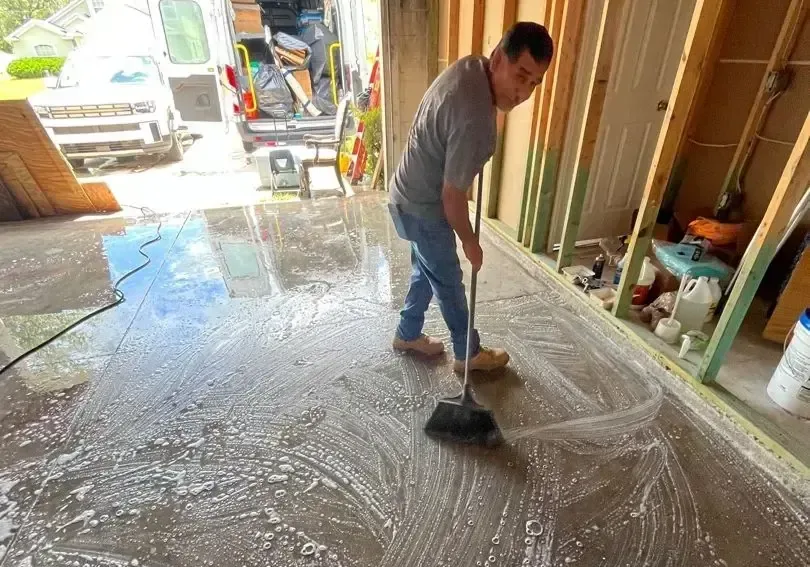
Water pulled out early leaves far less for the dehumidifiers to handle, and mold can begin in 24 to 48 hours on damp materials. A foothill downpour that drops 1.23 inches of rain in 24 hours can flood a garage and a hallway at once, so the crew works from the lowest, wettest room outward.
After the water is gone
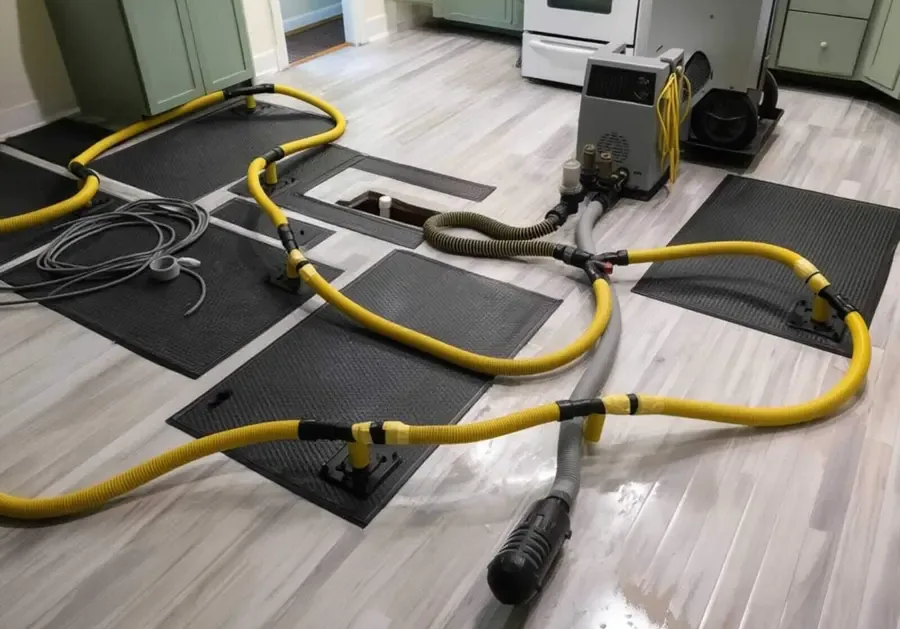
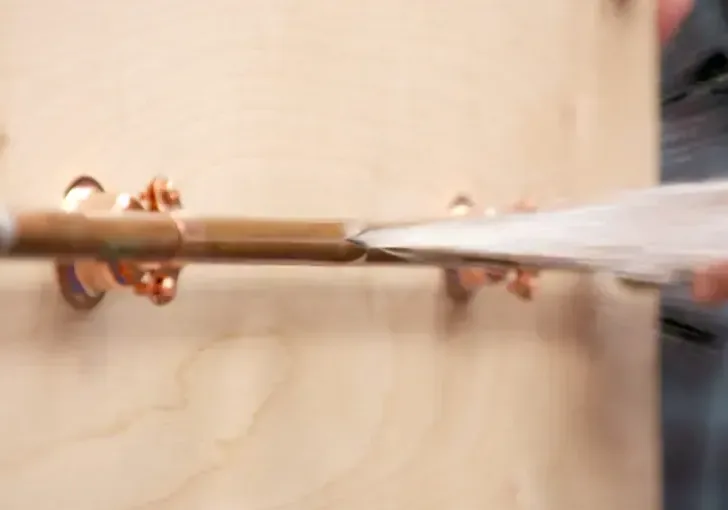
Pulling water out is only half of the job. Padding, baseboards and wall bottoms stay damp, so the crew sets air movers and dehumidifiers and moves into structural drying, with meters checking each surface. A split pipe behind the wall is a separate repair, covered under burst pipe water damage.
How water extraction and removal is held to a standard
Order matters: measure, extract, dry to a goal, then prove it with readings.
Dispatch at any hour
Active water is treated as urgent at 3 a.m., on a Sunday or on a holiday, the same as on a weekday morning.
Dry by the numbers
IICRC S500 sets the goal. Equipment stays until meter readings match a dry reference, not until a surface feels dry.
A file the adjuster can use
Moisture maps, daily psychrometric logs and timestamped photos taken before any demolition go into one record.
Built for valley houses
Slab floors, raised floors with crawl spaces, garage water heaters and older supply lines are routine work in valley homes.
Related water damage services
 Structural Drying and Dehumidification in Sierra MadreRead the details
 Storm Water and Street Flooding Cleanup in Sierra MadreRead the details
 Burst and Pinhole Pipe Leaks in Sierra MadreRead the details
Water Extraction and Removal in Temple CityRead the details
Water damage restoration in Sierra MadreRead the details
Burst and Pinhole Pipe Leaks in Sierra MadreRead the details
Water Extraction and Removal in Temple CityRead the details
Water damage restoration in Sierra MadreRead the details Service area: Sierra Madre, CA
Extraction crews work across the city, from homes near Memorial Park to houses along the foothill streets below the Angeles National Forest, in ZIP codes 91024 and 91025, at any hour of the day or night.
The same service nearby: water extraction and removal in Temple City, Arcadia, Rosemead.
Water damage restoration in Sierra Madre · every city covered
Water Extraction and Removal: questions and answers
How much water can the pumps remove?
Submersible pumps and truck mounted units clear several inches of water from a room in a short time, and weighted wands handle what soaked into carpet and padding.
Can carpet be saved after extraction?
Often, if the water was clean and extraction started early. The padding is usually replaced, because it holds moisture and dries slowly.
Is extracted water ever contaminated?
Yes. Storm runoff, sewage and water that sat for days are treated as contaminated, and the affected materials are removed instead of dried.
Does extraction include drying?
Extraction clears the standing water. Drying with air movers and dehumidifiers follows, because walls and subfloors keep moisture that pumps cannot reach.
What should I do before the crew shows up?
Shut off the water source if it is safe, switch off power to wet rooms and lift small items. Leave carpet, furniture and wall repairs for the crew to decide.
Water out of the house, then dried the right way.
Pumps, wands and meters work together to clear the water and show what stays wet.