Structural Drying and Dehumidification in Temple City, CA
After the standing water is gone, framing, subfloor, plaster and slab still hold water, so the drying team balances air movers and LGR dehumidifiers to each room and logs readings daily until materials match a dry reference.
(888) 578-6508 Walls still damp after the cleanup? Call- 24/7 drying crews
- LGR and desiccant dehumidifiers
- Daily psychrometric logs
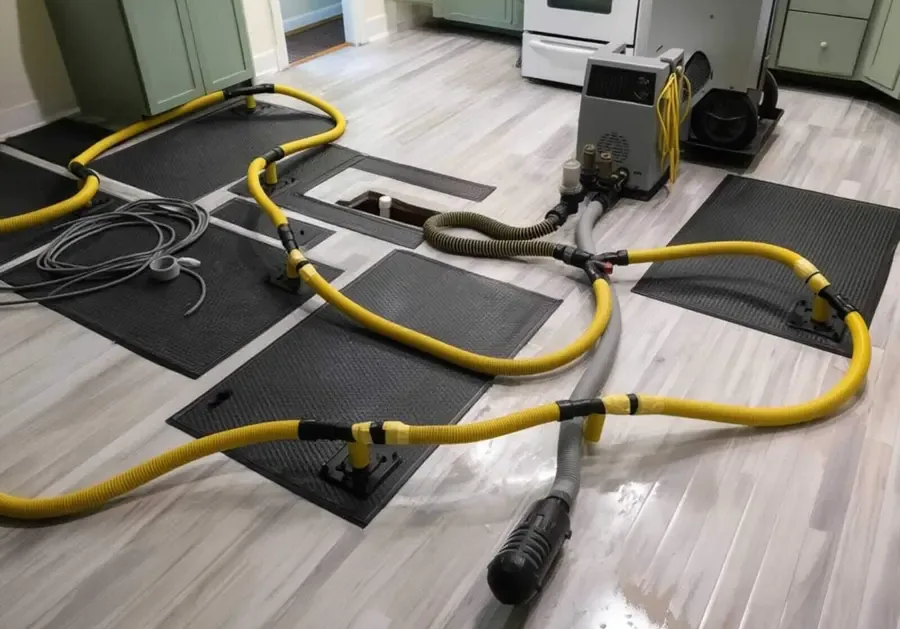
First steps when structural drying and dehumidification shows up
- 1Stop the source
Make sure the leak or the water source is fully stopped.
- 2Remove standing water
Extraction has to finish before structural drying starts.
- 3Leave the gear running
Do not switch off air movers or dehumidifiers early.
- 4Keep windows as directed
Follow the drying team's advice on doors and windows.
Structural drying is the part of a water job that decides whether the house is actually dry or only looks dry. Drywall can feel dry to the touch while the framing behind it, the subfloor under it or the slab below still holds enough water to warp, swell or start to smell.
How structural drying and dehumidification is handled in Temple City
- Map the moisture
Meters and thermal imaging find every wet material.
- Set the drying system
Air movers and dehumidifiers are sized to the class of loss.
- Log daily readings
Material and air readings are recorded every day.
- Verify dry
Equipment comes out when readings match the dry reference.
What does structural drying and dehumidification cost in Temple City, CA?
Structural drying usually runs about $1,000 to $2,500 for one room, $2,500 to $6,000 for several rooms and more when slabs, hardwood or plaster need extended drying. Class of loss and days of equipment drive the number.
One room
$1,000 to $2,500
Air movers, One dehumidifier, Daily readings
Several rooms
$2,500 to $6,000
Multiple LGR units, Wall cavity drying, Psychrometric logs
Dense materials
$6,000 to $13,000
Desiccant drying, Hardwood or slab drying, Extended monitoring
Ranges are typical, not a quote: the water category, the square footage, the material class and how fast drying started move the number most. The water damage cost calculator gives a closer planning range.
Class of loss sets the equipment
IICRC S500 groups losses by how much water soaked in and how hard it will be to remove. Class 1 is a small area with little absorption. Class 2 and 3 involve wet carpet, pad and walls. Class 4 means dense materials such as hardwood, plaster or concrete that hold water deep inside. The class sets how many air movers and dehumidifiers go in and how long they run.
Reading the air and the materials
- Psychrometric readings track temperature, humidity and grains per pound inside and outside the drying area
- Moisture meters read framing, subfloor and slab against a dry reference in the same house
- Equipment is moved or added when readings stall
- The job ends when materials are within 2 to 4 points of the dry reference
Dry air helps, but the readings decide
Dry inland air speeds evaporation, but closed-up houses still need dehumidifiers to pull that moisture out. The EPA indoor air quality pages explain moisture and indoor air, and the California Department of Insurance covers how drying documentation supports a claim. Drying crews run 24/7.
How structural drying and dehumidification is held to a standard
Order matters: measure, extract, dry to a goal, then prove it with readings.
Dispatch at any hour
Active water is treated as urgent at 3 a.m., on a Sunday or on a holiday, the same as on a weekday morning.
Dry by the numbers
IICRC S500 sets the goal. Equipment stays until meter readings match a dry reference, not until a surface feels dry.
A file the adjuster can use
Moisture maps, daily psychrometric logs and timestamped photos taken before any demolition go into one record.
Built for valley houses
Slab floors, raised floors with crawl spaces, garage water heaters and older supply lines are routine work in valley homes.
Related water damage services
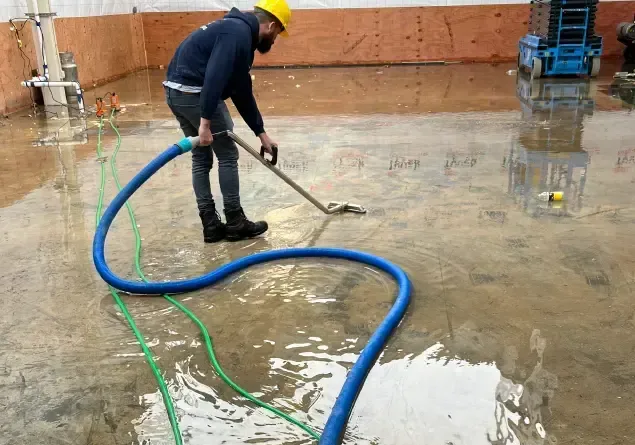 Water Extraction and RemovalRead the details
 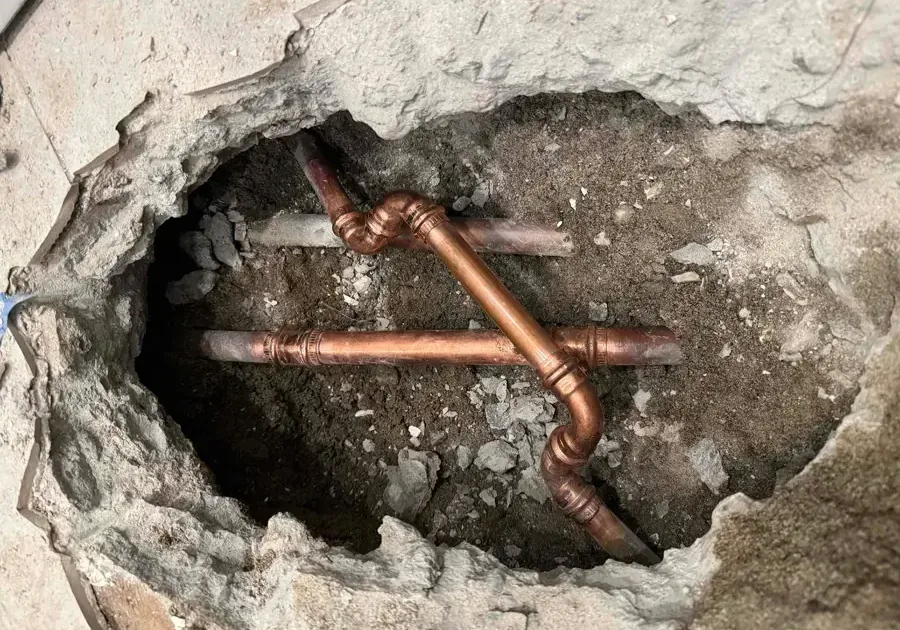 Slab Leak Water DamageRead the details
 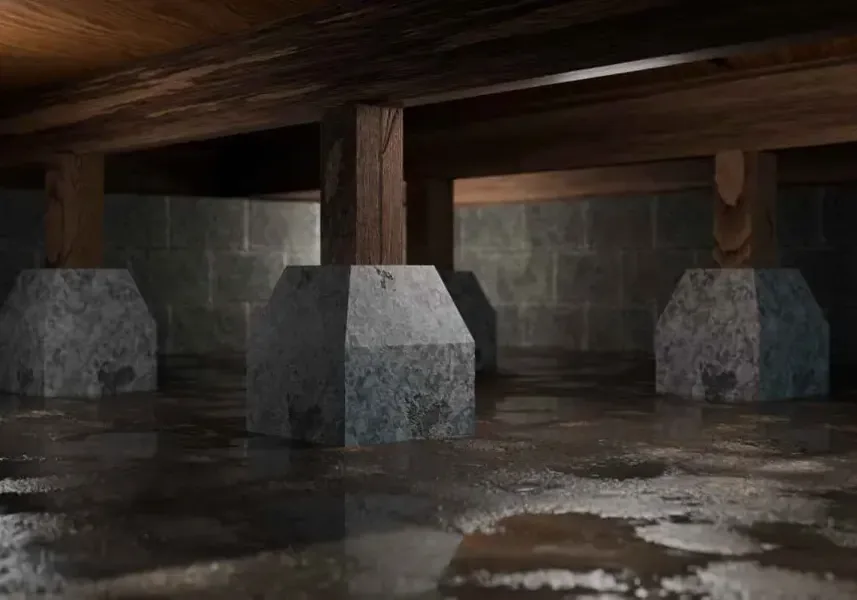 Crawl Space Water RemovalRead the details
 Service area: Temple City, CA
The restoration crew covers ZIP 91780 from Las Tunas Drive and the blocks around the park out to Rosemead Boulevard, Baldwin Avenue, Live Oak Avenue, Golden West Avenue and the streets that drain toward the Eaton Wash channel.
Nearby coverage reaches Arcadia, Rosemead, San Gabriel, San Marino, Sierra Madre, Monterey Park.
Structural Drying and Dehumidification: questions and answers
What is structural drying?
It is drying the building itself, framing, subfloor, walls and concrete, not just the surfaces, using air movers and dehumidifiers checked by daily readings.
Why can't I just open the windows to dry the house?
Open windows can help in dry weather, but they cannot pull water out of framing and slabs. Dehumidifiers and directed air do that work.
How long does structural drying take?
Most jobs take 3 to 5 days. Hardwood, plaster and concrete can take longer, and the readings decide when it is done.
What does dry to a reference mean?
The drying team reads an unaffected area of the same material in the house and dries wet materials to within 2 to 4 points of it.
Is the noise and power use from drying equipment normal?
Yes. Air movers and dehumidifiers run around the clock and draw power, which is why drying is planned to finish as fast as readings allow.
Water gone but the house still damp? Dry it to the standard.
Air movers, LGR dehumidifiers and daily readings, documented for the claim.