Commercial Water Damage in Temple City, CA
A burst line in a storefront along Las Tunas Drive, a restroom overflow in a restaurant or a leak spreading between apartment units needs fast extraction and drying planned around tenants and business hours.
(888) 578-6508 Storefront or suite flooded? Call dispatch- 24/7 commercial response
- Phased drying plans
- Documentation for owners and tenants
First steps when commercial water damage shows up
- 1Shut off the water
Close the main or the fixture valve feeding the leak.
- 2Protect people and stock
Clear customers and staff from wet areas and lift inventory.
- 3Cut power if needed
Turn off breakers for wet areas if the panel is dry.
- 4Notify the owner
Tenants should alert the property owner or manager right away.
Commercial water losses carry more than repair costs. Every day a shop, restaurant or office is closed is lost business, and in apartment buildings a leak in one unit often reaches the unit next door or below. Fast extraction and a drying plan built around the property keep that cost down.
How commercial water damage is handled in Temple City
- Assess and plan
The wet area is mapped and a phased plan is set with the owner.
- Extract and contain
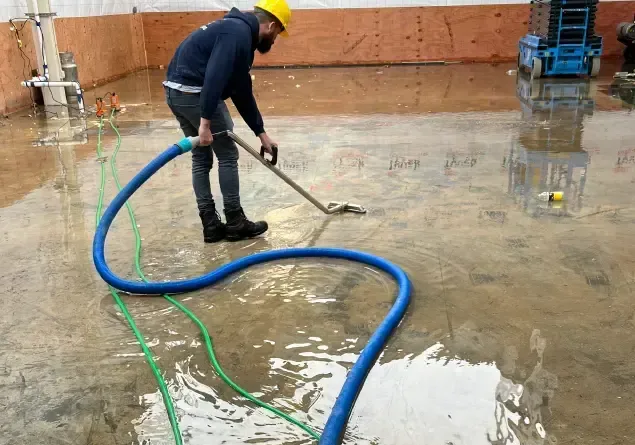
Water is removed and containment protects dry areas.
- Dry in phases
Equipment runs around business hours where readings allow.
- Document and close out
Readings and photos are recorded for owners and insurers.
What does commercial water damage cost in Temple City, CA?
Commercial water damage usually runs about $2,500 to $7,000 for one suite or storefront, $7,000 to $18,000 for several units or a larger floor and more for Category 3 losses. Square footage, containment and drying days drive the number.
One suite or storefront
$2,500 to $7,000
Extraction, Containment, Phased drying
Several units or a large floor
$7,000 to $18,000
Multiple drying zones, Unit-by-unit records, LGR dehumidifiers
Category 3 commercial loss
$18,000 to $40,000
Full containment, Porous materials removed, Antimicrobial treatment
Ranges are typical, not a quote: the water category, the square footage, the material class and how fast drying started move the number most. The water damage cost calculator gives a closer planning range.
Common commercial water losses
- Restroom and kitchen supply line failures in restaurants and shops
- Roof drain and storm leaks over retail floors
- Water heater and ice machine failures in back rooms
- Unit-to-unit leaks in apartment and condo buildings
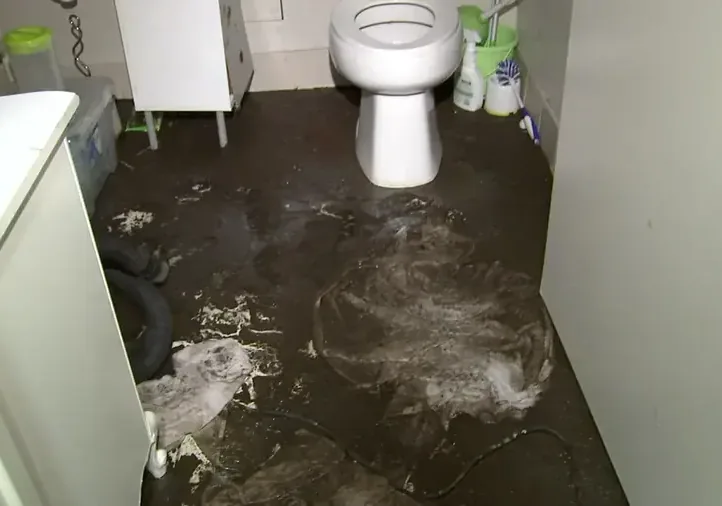
- Sewage backups from shared lines
Drying in phases
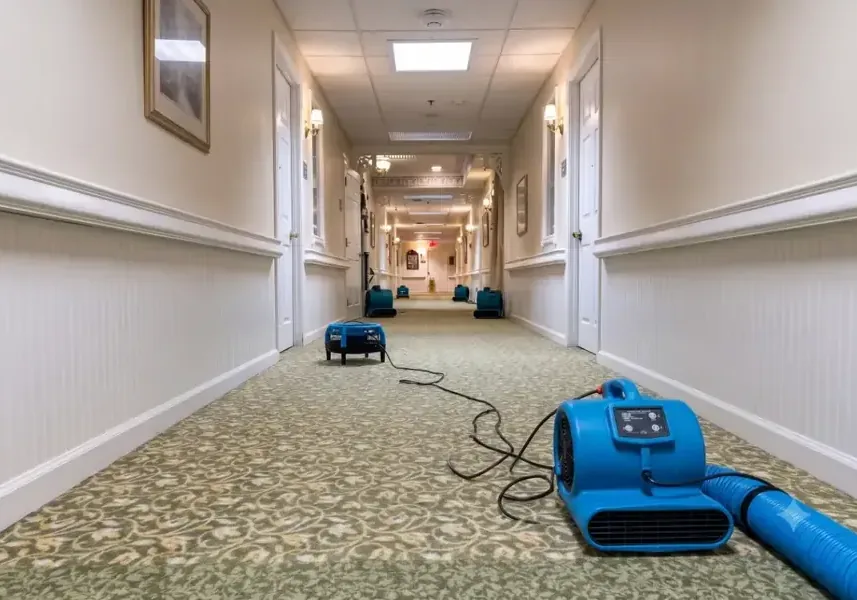
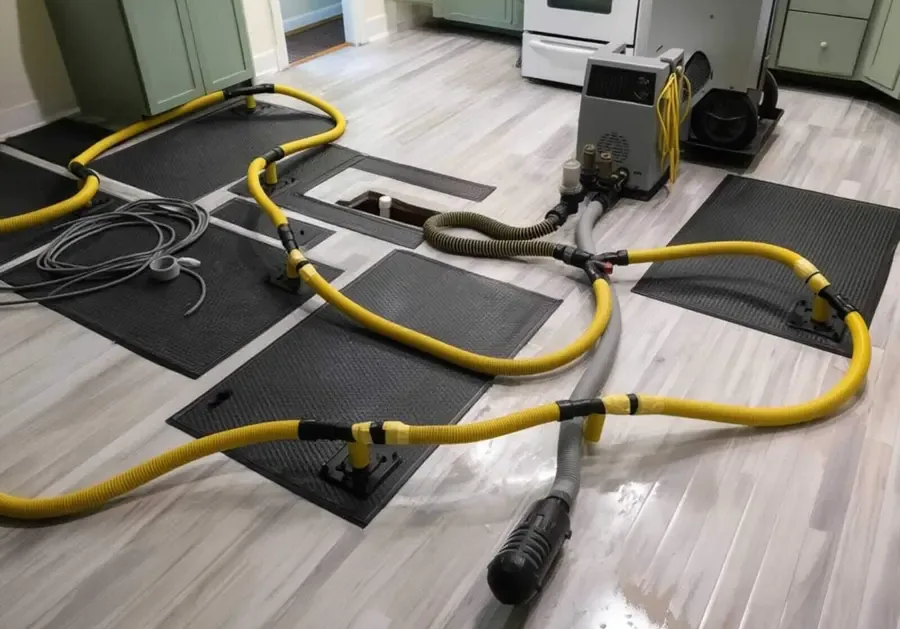
The crew extracts water first, then sets containment so dry areas can stay open while wet areas dry. Drying equipment is placed to keep aisles, exits and service counters usable where possible. In multi-unit buildings, each affected unit gets its own moisture map so owners, tenants and insurers can see what happened where.
Records for owners and insurers
Commercial claims often involve a property owner, tenants and more than one insurer. Daily logs, photos taken before demolition and a line-item scope keep everyone working from the same record. The California Department of Insurance covers commercial claim basics, and Ready.gov business preparedness helps plan for the next storm. Commercial crews run 24/7.
How commercial water damage is held to a standard
Order matters: measure, extract, dry to a goal, then prove it with readings.
Dispatch at any hour
Active water is treated as urgent at 3 a.m., on a Sunday or on a holiday, the same as on a weekday morning.
Dry by the numbers
IICRC S500 sets the goal. Equipment stays until meter readings match a dry reference, not until a surface feels dry.
A file the adjuster can use
Moisture maps, daily psychrometric logs and timestamped photos taken before any demolition go into one record.
Built for valley houses
Slab floors, raised floors with crawl spaces, garage water heaters and older supply lines are routine work in valley homes.
Related water damage services
 Water Extraction and RemovalRead the details
  Structural Drying and DehumidificationRead the details
  Sewage Backup CleanupRead the details
 Service area: Temple City, CA
The restoration crew covers ZIP 91780 from Las Tunas Drive and the blocks around the park out to Rosemead Boulevard, Baldwin Avenue, Live Oak Avenue, Golden West Avenue and the streets that drain toward the Eaton Wash channel.
Nearby coverage reaches Arcadia, Rosemead, San Gabriel, San Marino, Sierra Madre, Monterey Park.
Commercial Water Damage: questions and answers
Can a business stay open during commercial water damage drying?
Often partly. Containment and phased drying can keep dry areas open while wet areas are dried, depending on the size and category of the loss.
Who should call when a tenant has a leak?
The tenant should stop the water if possible and notify the property owner or manager right away; either can call for extraction and drying.
How long does commercial drying take?
Most commercial losses dry in 3 to 7 days. Larger spaces, dense materials and Category 3 water take longer.
Is commercial water damage handled differently from a house?
The drying science is the same, but the planning differs: more people, stock, equipment and insurers, and a focus on keeping the business running.
What records does a commercial claim need?
Moisture maps, daily readings, timestamped photos before demolition and a line-item scope, separated by unit or suite where needed.
Business flooded? Get it dried while doors stay open where possible.
Extraction, containment and phased drying, documented for owners and insurers.