Burst Pipe Water Damage in Rosemead, CA
A split or pinhole pipe can soak walls, ceilings and floors long before anyone sees it. Crews stop the spread with extraction, open the wet cavities and dry them to measured readings.
(888) 578-6508 Describe the pipe failure- Wall cavities opened
- Ceilings and floors dried
- Plumber visit coordinated
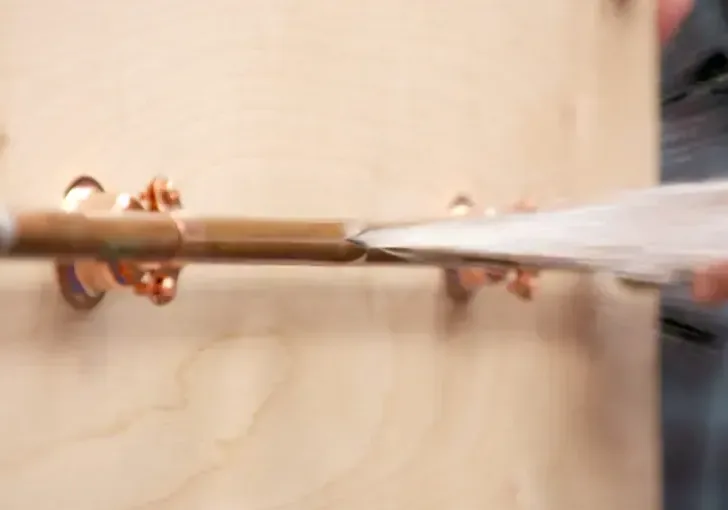
First steps when burst and pinhole pipe leaks shows up
- 1Find the shutoff
Turn off the fixture valve, or the main valve if the source is unclear.
- 2Drain the pipes
Open a low faucet to relieve water still in the broken pipe.
- 3Protect the electrics
Avoid wet outlets and switch off breakers for soaked walls.
- 4Note the timeline
Write down what you saw and when, since adjusters ask.
Pipe failures range from a violent split to a slow pinhole drip behind drywall. Either one can soak insulation, wall bottoms, ceilings and flooring, and hidden leaks often go unnoticed until paint bubbles or a musty smell appears.
How burst and pinhole pipe leaks is handled in Rosemead
- Control the water
Shutoff is confirmed and standing water is extracted.
- Open the cavity
Inspection holes and cuts reach the trapped moisture.
- Dry the structure
Air movers and dehumidifiers run with readings each visit.
- Hand off for repairs
Final readings show the area is ready for rebuilding.
What does burst and pinhole pipe leaks cost in Rosemead, CA?
Burst pipe water damage typically costs $1,500 to $3,500 for one wall and room and $3,500 to $7,500 for several rooms. When ceilings and floors are both soaked, expect $7,500 to $15,000.
One wall and room
$1,500 to $3,500
Extraction, Cavity opened, Air movers
Several rooms
$3,500 to $7,500
Wet insulation removed, Wider drying setup, Dehumidifiers
Ceilings and floors
$7,500 to $15,000
Ceiling sections opened, Floor drying panels, Extended monitoring
Ranges are typical, not a quote: the water category, the square footage, the material class and how fast drying started move the number most. The water damage cost calculator gives a closer planning range.
Opening walls with care
Crews cut inspection holes where meters show moisture, then open only as much drywall as needed to dry the cavity. Insulation that holds water is removed, because it stays wet for a long time and cannot dry in place, and wet baseboards and trim often come off with it.
Coordinating the repair
A plumber repairs the pipe while the drying crew extracts and sets equipment. When water traveled downward, ceiling leak damage may need its own attention, and wide spread calls for structural drying. The wet areas are logged room by room for the claim.
How burst and pinhole pipe leaks is held to a standard
Order matters: measure, extract, dry to a goal, then prove it with readings.
Dispatch at any hour
Active water is treated as urgent at 3 a.m., on a Sunday or on a holiday, the same as on a weekday morning.
Dry by the numbers
IICRC S500 sets the goal. Equipment stays until meter readings match a dry reference, not until a surface feels dry.
A file the adjuster can use
Moisture maps, daily psychrometric logs and timestamped photos taken before any demolition go into one record.
Built for valley houses
Slab floors, raised floors with crawl spaces, garage water heaters and older supply lines are routine work in valley homes.
Related water damage services
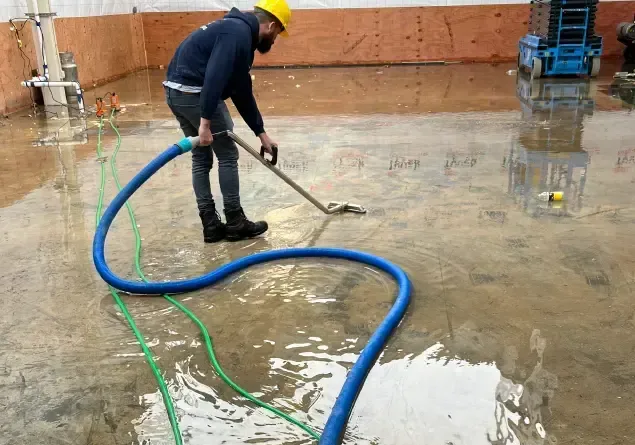 Water Extraction and Removal in RosemeadRead the details
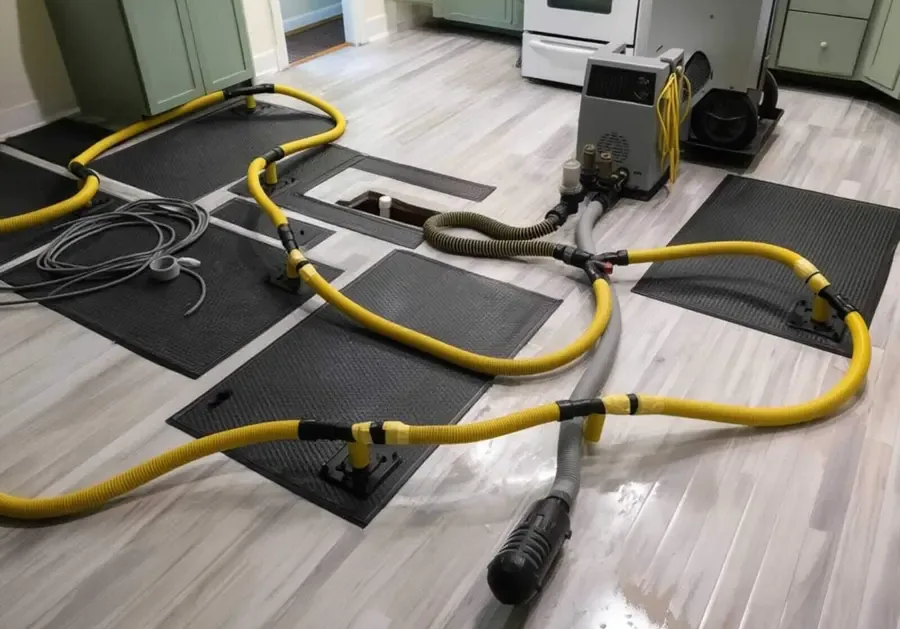 Structural Drying and Dehumidification in RosemeadRead the details
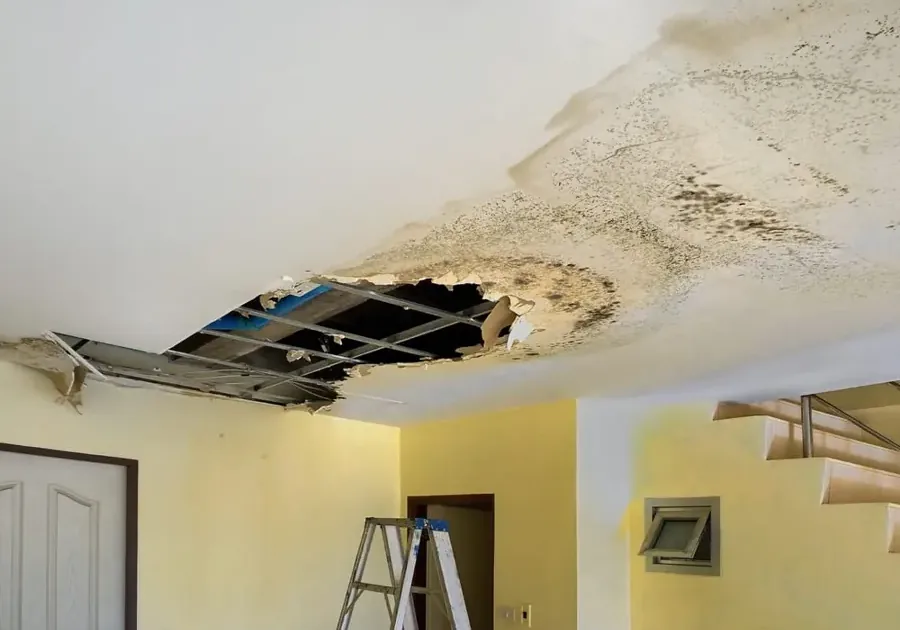 Ceiling Leak Water Damage in RosemeadRead the details
Burst and Pinhole Pipe Leaks in Temple CityRead the details
Water damage restoration in RosemeadRead the details
Ceiling Leak Water Damage in RosemeadRead the details
Burst and Pinhole Pipe Leaks in Temple CityRead the details
Water damage restoration in RosemeadRead the details Service area: Rosemead, CA
A broken pipe can flood a street as well as a house. A main break closed the intersection of Grand and Muscatel avenues in Rosemead on January 30, 2017, and city crews repaired it. Indoors, the drying crew handles what a break leaves.
The same service nearby: burst and pinhole pipe leaks in Temple City, Monterey Park, Arcadia.
Burst and Pinhole Pipe Leaks: questions and answers
How do I tell a pinhole leak from a burst pipe?
A burst pipe releases a lot of water at once. A pinhole leak is a slow, steady drip that shows up as stains, odors or a meter that keeps moving.
Can a pipe break flood a whole street?
Yes. A water main break closed the intersection of Grand and Muscatel avenues in Rosemead on January 30, 2017, as reported by the Sheriff's Temple Station.
Do I need to open the wall?
Only where moisture is trapped. Meters and thermal imaging show where the water went, and crews open the smallest area that allows proper drying.
Will insurance cover a burst pipe?
Sudden and accidental pipe failures are commonly covered, while long term leaks may not be. Document the cause and the timeline.
What happens to the insulation?
Wet insulation holds water for a long time and usually has to be removed, then replaced after the cavity is dry.
Water behind a wall keeps spreading until someone dries it.
Extraction, cavity opening and measured drying, with the plumber's repair worked into the plan.