Storm Water and Street Flooding Cleanup in Pico Rivera, CA
Heavy rain can outpace the storm drains and push runoff into garages, hallways and other ground-level rooms. The cleanup crew pumps out the water, removes silt and mud, washes surfaces and dries the structure.
(888) 578-6508 Runoff coming into the house? Call now- Pumping and silt removal
- Mud washed from floors and walls
- Structure dried and documented
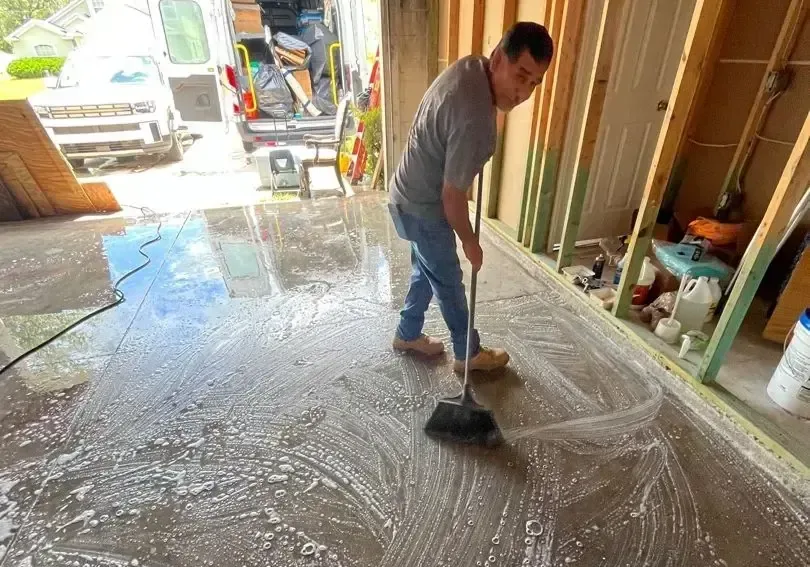
First steps when storm water and street flooding cleanup shows up
- 1Stay out of deep water
Wading near outlets or moving water is unsafe until power is off.
- 2Cut power to wet rooms
Switch off breakers for the garage and low rooms.
- 3Move vehicles and valuables
Relocate cars, tools and boxes to higher ground before more runoff arrives.
- 4Photograph the waterline
Capture the high-water mark on walls and furniture for the claim.
Storm drains are the primary local flood control facilities in Pico Rivera, so when a downpour outpaces them, runoff finds the lowest doorway. Whittier Narrows Dam, a regional flood control structure beside the city, holds little water most of the year, so most storm calls start with runoff reaching one house rather than a regional event.
How storm water and street flooding cleanup is handled in Pico Rivera
- Pump out the water
Submersible pumps clear standing runoff from garages and low rooms.
- Remove mud and silt
Shovels, wet vacuums and rinsing take out the debris.
- Wash and sanitize
Floors and lower walls are cleaned with antimicrobial products.
- Dry the structure
Air movers and dehumidifiers run until readings match dry areas.
What does storm water and street flooding cleanup cost in Pico Rivera, CA?
Storm cleanup usually costs about $1,800 to $4,000 for a garage or one room and $4,000 to $9,000 for several rooms. Widespread intrusion with heavy silt, mud and damaged drywall can run $9,000 to $20,000.
Garage or one room
$1,800 to $4,000
Pump-out and rinse, Mud removed, Air movers set
Several rooms
$4,000 to $9,000
Silt cleared out, Pad discarded, Dehumidifiers added
Widespread intrusion
$9,000 to $20,000
Heavy silt removal, Drywall cut out, Extended drying
Ranges are typical, not a quote: the water category, the square footage, the material class and how fast drying started move the number most. The water damage cost calculator gives a closer planning range.
Why storm water needs more than pumping
- Runoff carries soil, oil and debris into the house
- Mud left in place dries into a film that traps moisture
- Carpet and pad that sat in dirty water are usually replaced
- Hard floors and lower walls get washed and sanitized
Because runoff is rarely clean, the crew treats storm water as gray or dirty until the source and the materials it touched are checked.
Protecting the house while rain continues
Move vehicles and valuables out of the garage, shut off power to flooded circuits and avoid wading through water that may touch outlets. Sandbags and clear downspouts help hold runoff back, though they cannot replace extraction once water is inside.
After the water leaves
Pumping is only half the job. Structural drying removes moisture from studs and subfloors, and the water extraction page explains the pump-out. The main storm cleanup overview covers the full process.
How storm water and street flooding cleanup is held to a standard
Order matters: measure, extract, dry to a goal, then prove it with readings.
Dispatch at any hour
Active water is treated as urgent at 3 a.m., on a Sunday or on a holiday, the same as on a weekday morning.
Dry by the numbers
IICRC S500 sets the goal. Equipment stays until meter readings match a dry reference, not until a surface feels dry.
A file the adjuster can use
Moisture maps, daily psychrometric logs and timestamped photos taken before any demolition go into one record.
Built for valley houses
Slab floors, raised floors with crawl spaces, garage water heaters and older supply lines are routine work in valley homes.
Related water damage services
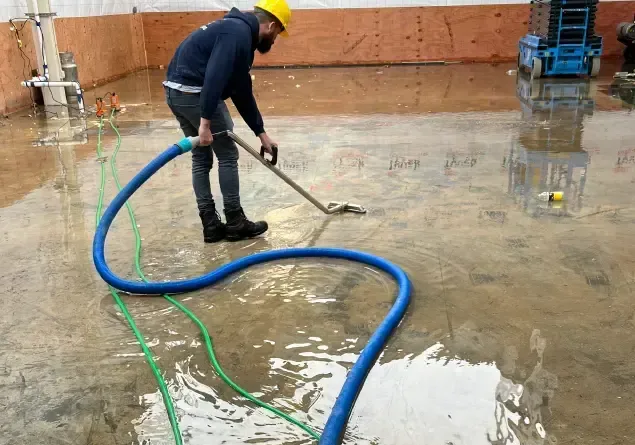 Water Extraction and Removal in Pico RiveraRead the details
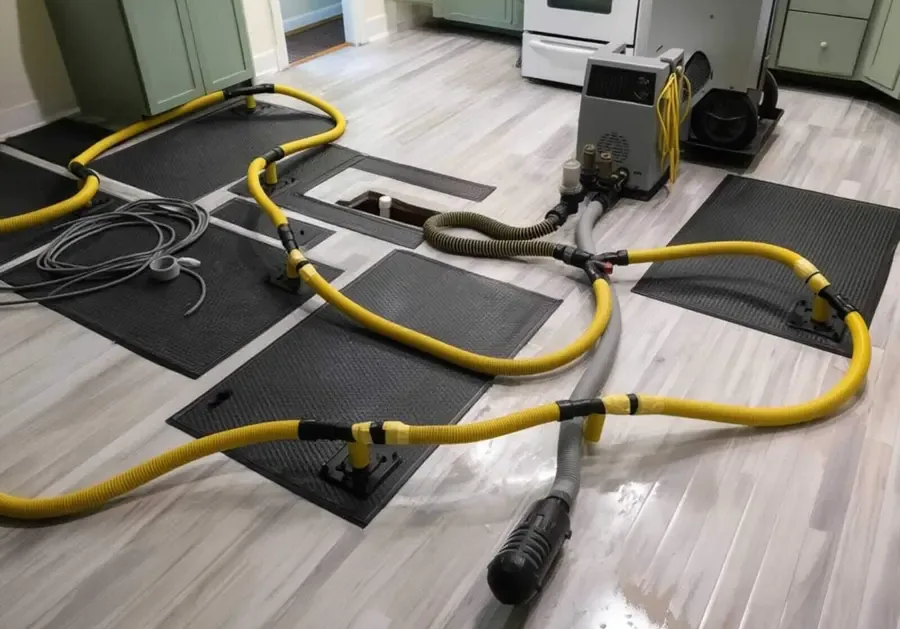 Structural Drying and Dehumidification in Pico RiveraRead the details
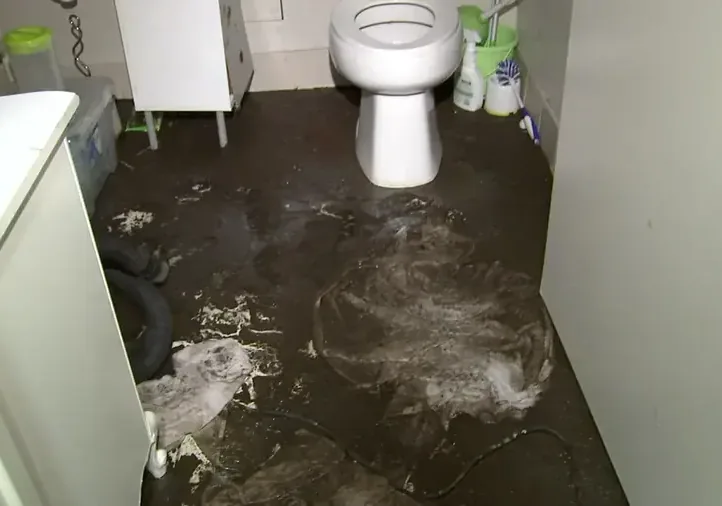 Sewage Backup Cleanup in Pico RiveraRead the details
Storm Water and Street Flooding Cleanup in Temple CityRead the details
Water damage restoration in Pico RiveraRead the details
Sewage Backup Cleanup in Pico RiveraRead the details
Storm Water and Street Flooding Cleanup in Temple CityRead the details
Water damage restoration in Pico RiveraRead the details Service area: Pico Rivera, CA
Storm cleanup reaches every part of the city, from blocks near the Rio Hondo and the San Gabriel River to streets along Telegraph Road and Slauson Avenue where runoff gathers in garages and low rooms.
The same service nearby: storm water and street flooding cleanup in Temple City, Monterey Park, Rosemead.
Water damage restoration in Pico Rivera · every city covered
Storm Water and Street Flooding Cleanup: questions and answers
Is storm water considered dirty?
Usually. Runoff collects soil, oil and debris on the way in, so it is treated as gray or dirty water until the crew checks the source and the materials it touched.
Can mud be left to dry first?
No. Mud dries into a film that holds moisture against walls and flooring and keeps the structure damp. Removing it early makes drying faster.
Does homeowners insurance cover flooding?
Standard policies often exclude surface flooding and need a separate flood policy, while wind-driven rain through a damaged roof or window may be covered. Check the policy and document everything.
What about the garage?
Garages take the first hit because they sit lowest. Water is pumped out, mud removed, the concrete washed and wall bottoms checked for damp drywall.
Should furniture be moved?
Yes, if it is safe. Lift furniture onto blocks, photograph anything that stays wet and let the crew decide what can be dried in place.
Mud, silt and standing water need a crew fast.
Pump-out, washing and structural drying clear the runoff and the dampness behind it.