Sierra Madre sits in the foothills, below the southern edge of the Angeles National Forest. When heavy rain falls overnight, mud and debris can move toward homes along with the water.
Key takeaways
- Follow any shelter in place or official instruction before starting cleanup.
- Heavy rain once sent mud and debris flows into a Sierra Madre neighborhood overnight and led to a shelter in place order.
- Mud carries contaminants, so it is handled as dirty water with protective gear.
- Photograph before moving anything and keep the mud for a short time as evidence.
- Wet floors and walls under the silt need extraction and drying even after the mud is removed.
A foothill setting with a long weather history
Sierra Madre sits at an elevation of 827 feet in the foothills of the San Gabriel Valley. Its mountain backdrop is beautiful, and it also sends rain downhill.
A storm and flood in March 1938 destroyed many resorts in the local mountains, including Muir Lodge in Big Santa Anita Canyon above Sierra Madre.
More recently, heavy rain sent mud and debris flows into a Sierra Madre neighborhood overnight and led to a shelter in place order. A thunderstorm also brought a flood advisory and 1.23 inches of rain in 24 hours.
Safety before cleanup
Mud and debris can hide sharp objects and carry bacteria. The first priority is safety, not salvage.
After an overnight event, wait until officials say it is safe to go outside. Stay clear of moving water, downed wires and unstable ground.
- Do not walk through moving water or over saturated slopes.
- Avoid contact with mud without gloves and boots.
- Turn off power to wet areas only from a dry spot.
- Keep children and pets out of the mud.
- Wash hands and clothes after any contact.
First steps inside the house
Mud tends to enter through doors, garage openings and low windows. Once inside, it spreads on shoes, towels and tools.
Photograph and protect
Photograph the mud line on walls, the depth on the floor and any damaged belongings before moving things.
Lift furniture off the floor and move valuables to a dry room.
Do not wash mud down the drain
Hosing mud into a floor drain or sink can clog the pipes. Shovel or scoop the heaviest mud into buckets or heavy bags first.
The restoration team removes the remaining slurry with extraction equipment.
Extraction of muddy water and silt
Water that carries silt cannot be handled like a plumbing leak. The extraction crew works in stages: bulk mud first, then water, then fine silt.
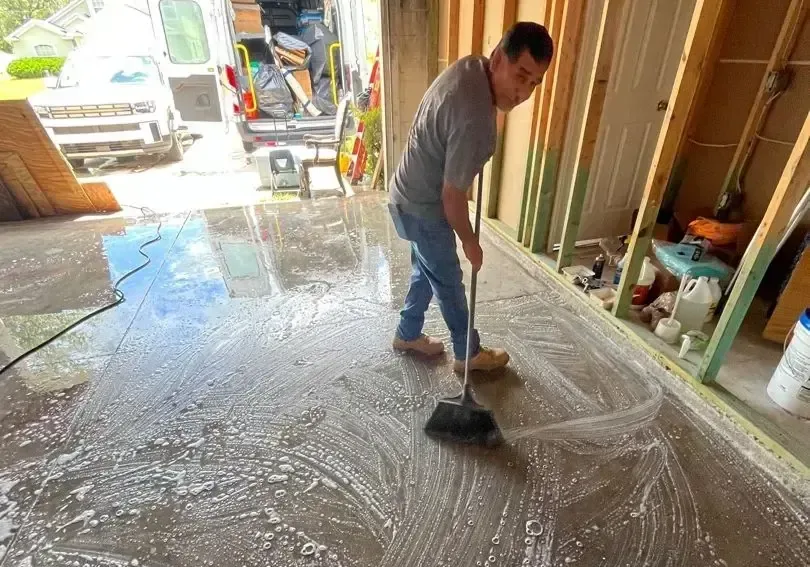
Carpet, pad and soft furnishings that sat in mud are usually removed. Hard floors are washed with a cleaner and rinsed.
- Bulk mud removed by shovel and wet vacuum.
- Muddy water pulled out with truck mounted or portable extractors.
- Floors and lower walls washed and rinsed.
- Carpet, pad and wet insulation removed when needed.
- Debris bagged and removed.
Understanding mud and debris flows
Mud and debris flows are different from a simple rise of water. They are thick, move quickly and carry rocks, sticks and soil.
They tend to follow slopes and channels, and they can reach doors and garage openings in a short time.
Because the mix includes soil and organic matter, the cleanup is heavier and the drying takes more care.
- Water carrying silt and fine sand.
- Rocks and branches that can block doors.
- A layer of mud that dries into a crust.
- A strong earthy or sour smell.
- Residue that stains walls to a clear line.
Keeping the lower floors safe during the event
Residents who are told to shelter in place should stay inside and away from the lowest rooms if they can.
After the event, wait for official word before returning to a flooded garage or lower level. Silt can hide a drop, a missing step or an open drain.
Electrical and gas safety
Outlets, panels and appliances that sat in water should not be switched on until they are checked.
A smell of gas means leaving the house and calling the utility from a safe place.
Pets and children
Keep them out of the mud. It carries germs, and the smell can hide sharp objects.
What gets saved and what does not
Not every item is lost. The restoration team sorts belongings into groups so the cleanup is efficient.
Hard goods such as tools, plastic bins and metal items can usually be washed. Porous goods are harder to save.
- Hard surfaces and sealed tile: washed and kept.
- Carpet and pad: usually removed.
- Upholstered furniture: judged case by case.
- Cardboard and paper: discarded unless irreplaceable.
- Wood furniture: dried and checked for swelling.
Silt on the walls and in the framing
Mud splashes up the walls. A thin film on paint is cleaned, but silt that has worked into the base of the drywall is removed with the wet board.
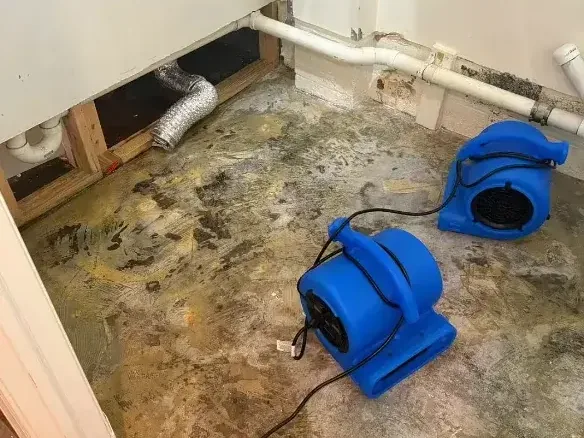
The team checks the bottom plate and studs with a moisture meter. Sealed wood often dries in place with air movers, while wet insulation is removed.
Keeping notes for later
Photos of the mud line, the doorways and the flood marks help with later conversations. A short list of damaged items with approximate dates is useful too.
A foothill home can see more than one event in a wet winter, so a record helps.
Drying the floors and walls
After the mud is gone, the structure is still wet. Water soaks into subfloor, baseboards and the bottom of the drywall.
The drying team places air movers and dehumidifiers, takes moisture readings and opens low walls where moisture is trapped.
The same readings are repeated each visit. Equipment is removed only when the readings match a dry reference.
Drywall and wood that stay wet for a day or two can develop mold, so drying should not wait.
Foothill storms and repeat risk
A foothill home may face repeat runoff in a wet season. Homeowners can plan by keeping gutters and drains clear and moving valuables off the garage floor before a storm.
The storm flood cleanup and water extraction services cover this kind of loss, and the Sierra Madre hub lists the rest. The wider overview is under storm water cleanup.
Questions
Can the mud be cleaned up right after the rain stops?
Only after officials say it is safe. Then start with photos, protective gear and removing bulk mud.
Is mud considered contaminated?
Yes. Mud and debris can carry bacteria and chemicals, so it is handled as dirty water.
Will drying be needed after the mud is gone?
Yes. Water soaks into floors and low walls under the mud, so drying and moisture readings are still required.
Should mud be rinsed down a drain?
No. It can clog drains. Scoop it into containers first and let the crew extract the rest.
What is the shelter in place order?
It was an official instruction during a past overnight event. Always follow the current instructions from local officials.