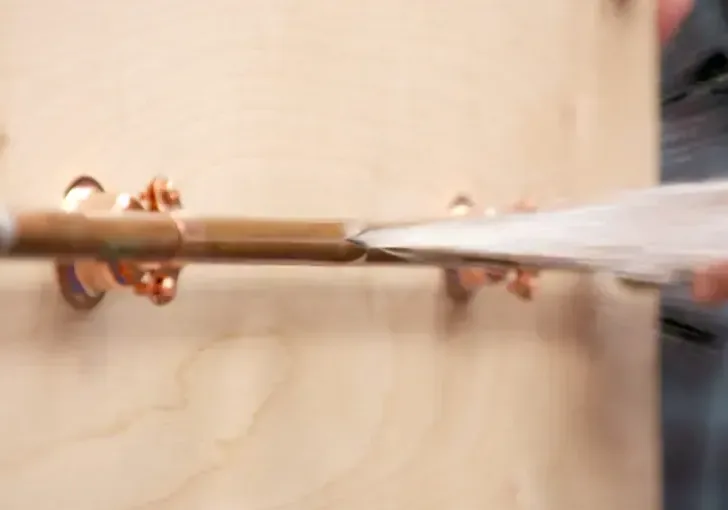
A broken water main is a city problem in the street, but the water can still end up in a yard, a driveway or the house. Knowing which side of the property line a pipe failed on changes who fixes it and what to check.
Key takeaways
- City crews repair the main and the road. The pipe from the meter to the house belongs to the property.
- On Monday, January 30, 2017, a break closed the intersection of Grand and Muscatel avenues in Rosemead.
- Muddy water, low pressure or a wet patch in the yard can point to a pipe problem near the house.
- Know where the main shutoff valve is before there is a leak.
- Wet drywall, flooring and cabinets should be dried quickly, whatever pipe the water came from.
A break in the street is not the same as a leak in the house
On Monday, January 30, 2017, a water main break closed the intersection of Grand and Muscatel avenues in Rosemead. City water crews repaired the pipe and the road.
Another report describes a broken water pipe that once flooded a neighborhood in Rosemead before crews repaired it.
These stories show the usual pattern. The big pipe in the street is handled by the utility and the city.
What happens on the private side of the meter is the property owner's concern.
- The main sits under the street and serves many homes.
- The service pipe runs from the meter into the building.
- The plumbing inside the walls and under the floor belongs to the building.
Signs the problem may be close to the house
A break nearby does not always mean a break on the property. These signs help sort the two.
Signs outside
Look at the front yard, planter beds and the area around the meter box.
Pooling water, soft soil or a steady trickle on a dry day can point to a failed service pipe.
- Water bubbling up at the sidewalk or driveway.
- A meter that keeps turning when every fixture is off.
- Unusually green or soggy patches of lawn.
Signs inside
Inside the house, the clues are usually subtle at first.
A musty smell, a warm patch on the floor or a stain on a wall that grows can all be a pipe leaking in a cavity.
- Low pressure at several faucets at once.
- Cloudy or brown water from the tap after a nearby break.
- Baseboards that feel damp or flooring that has started to lift.
What to do in the first hour at home
The goal is to stop the water and protect the structure, then document before anything is moved.
- Find the main shutoff valve at the house and close it.
- Open a low faucet to drain remaining pressure after the valve is closed.
- Turn off power to wet areas if outlets or appliances are touched by water.
- Photograph the wet areas, the meter and the street.
- Contact a plumber for the repair and the water damage team for extraction.
Why a break nearby can still affect a house
A main break changes pressure in the pipes around it. Sediment can be stirred up, valves can be closed and opened, and the first water back through the house can carry dirt.
That is why a faucet may spit or run brown for a short time. Running the cold tap at the lowest point of the house until it clears is the usual advice, and any sign of a leak afterward is worth checking at once.
Sudden pressure swings can also expose a weak joint or an old fitting in the house plumbing. A leak that appears right after a nearby break is not always caused by the break, but the timing is worth noting.
- Run the cold water until it clears, and avoid doing laundry in cloudy water.
- Check under sinks and behind toilets for new drips.
- Look at ceilings below bathrooms for fresh stains.
- Watch the meter for movement with all fixtures off.
Renters, owners and the building shutoff
In an apartment building, the shutoff may be in a utility room, a stairwell or the exterior. Tenants should know where it is before an emergency.
If a tenant notices water, the first call is to the manager, since a stuck valve or a hidden leak affects more than one home.
Owners of single-family houses should test the main valve once a year so it moves when needed.
The private side of the meter
The service pipe and the plumbing inside the house are the property's responsibility in most cases, so a plumber is called for the repair.
A plumber stops the leak. The water damage team deals with what the water touched, including the flooring, drywall, cabinets and the insulation in the wall.
These are separate jobs that happen in a useful order: the water is stopped, the standing water is extracted, and then the structure is dried and checked.
Why both trades matter
A plumber can fix a pipe in an afternoon and leave a wet wall behind. A drying team can dry a wall and have the leak return if the pipe is not repaired.
Coordinating the two keeps the same room from being opened twice.
When water has entered the house
If a failed service pipe or a pipe in a wall releases water into the building, the building materials start absorbing it at once.
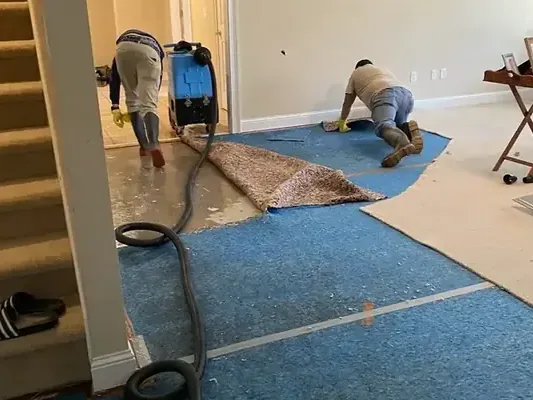
The extraction crew removes standing water from floors with truck mounted or portable units, and the drying team opens baseboards and low drywall to check the cavity.
Clean water from a supply pipe is in the cleanest category when it first appears, but it changes as it sits and spreads through porous materials.
- Carpet and pad are lifted and checked.
- Cabinet toe kicks are removed so the base can dry.
- Wet insulation in the wall is pulled when it will not dry in place.
How drying is measured
The drying team places air movers and dehumidifiers, then records moisture readings on the first day and each visit afterward.
The target is the dry reference reading of an unaffected wall in the same house. The equipment stays until the wet areas match it.
Leaving damp drywall or subfloor behind a finished wall is how a small leak becomes a long term problem, including mold.
Rosemead homes and rentals
Rosemead is a dense city of 51,185 people at the 2020 census. In 2010, about 48.9 percent of occupied units were owner-occupied and 51.1 percent were rented.
A tenant who notices water in a unit should tell the landlord or manager right away, because the shutoff for a building is often outside the unit.
For leaks in walls and ceilings, burst pipe water damage work starts with stopping the water, and water extraction removes what has already spread.
Local services are collected on the Rosemead hub, and the wider process is described under burst and pinhole pipe leaks.
Questions
Who repairs a water main break in the street?
The water utility and city crews repair the main and the road. The January 30, 2017 break at Grand and Muscatel avenues was repaired by city water crews.
How can a homeowner tell if the leak is on the private side?
A meter that keeps moving with every fixture off, wet soil near the meter box or damp flooring inside all point to a private side problem.
Should the water be shut off at the house after a nearby break?
If water is entering the property or the pipes sound wrong, close the main shutoff valve at the house and call a plumber.
Is water from a supply pipe safe to clean up?
Supply water starts out clean, but it picks up contaminants as it spreads through dust and materials, so wet items should be dried fast and checked.
How long does drying take after a supply pipe leak?
It depends on how much water spread and what it soaked. The drying team keeps equipment running until moisture readings match a dry reference.