A storm drain that is blocked by debris can turn an ordinary rainstorm into a street flood within a single afternoon. When the street fills, the next places the water goes are driveways, garage doors and low entries.
Key takeaways
- A single blocked inlet can back runoff across a whole block, even when the rain is not extreme.
- On October 5, 2015, a garbage can blocking a storm drain left about a foot and a half of water on Roseglen Street.
- Stay out of moving street water and away from wet outlets, panels and extension cords.
- Photograph the water line on walls and belongings before anything is moved.
- Extraction and drying should start while the materials are still only wet, not yet stained or swollen.
What happened on Roseglen Street in 2015
On Monday, October 5, 2015, a heavy afternoon rainstorm flooded several streets in Temple City.
On Roseglen Street the water reached about a foot and a half deep after a garbage can blocked a storm drain.
Once the can was moved, the water drained to the nearby wash. LA County Fire and Public Works cleared the drain.
The episode is a useful picture of how little it takes. The storm was heavy, but the street flooded because one inlet could not take the flow.
- The rain arrived in the afternoon, so many residents were at work or school.
- The blockage was a household item, not a failed pipe.
- The water left quickly once the inlet was open.
Why runoff has to go somewhere
The city sits at the base of the San Gabriel Mountains at an elevation of about 400 feet, and rain that falls on roofs, driveways and streets runs to the curb.
Eaton Wash runs in manmade channels and storm drains in its lower reaches, then drains to the Rio Hondo and on to the Los Angeles River.
That system works when the inlets are open. When one is covered by trash, leaves or a bin that rolled into the gutter, the water stops moving and the street becomes a shallow pond.
How the water gets inside
Water rarely needs a flood to enter a house. It needs a low point and a few minutes of standing depth.
The common entry points on an ordinary street are listed below.
- The gap under a garage door, especially where the slab slopes toward the street.
- A front or side door threshold that sits close to the walkway.
- Sliding door tracks and weep holes.
- Crawl space or foundation vents at ground level.
- A driveway that slopes toward the house instead of away from it.
The first steps while the street is still wet
Safety comes before saving belongings. Moving water can hide curbs, open drains and debris, and wet garages often hold power tools, freezers and electric panels.
The restoration team recommends a short, calm sequence.
- Stay out of the street water and keep children and pets away from it.
- Do not step into a flooded room if outlets, a panel or extension cords are in the water. Turn off power at the main only from a dry spot.
- Photograph the street, the water level on walls and the items that are wet.
- Move boxes, rugs and electronics to dry areas, and lift furniture legs onto blocks or foil.
- Report the blocked drain to the county once it is safe to do so.
How extraction works on stormwater
Street water carries silt, oil and whatever else was in the gutter, so it is treated as dirty water, not as a clean leak.
The extraction crew uses truck mounted or portable units to remove standing water from slabs, tile and carpet, and pulls rugs and pads that cannot be saved.
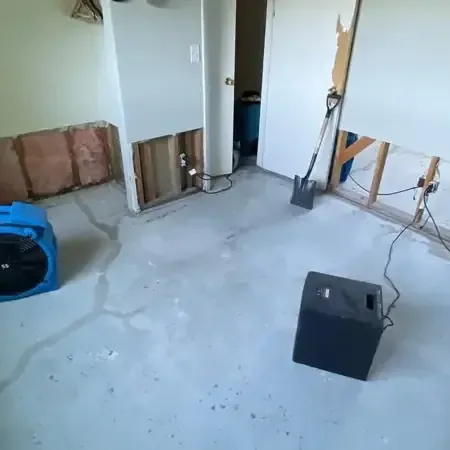
Baseboards come off so wet drywall and the bottom of the wall cavity can be checked and opened where needed.
Garages and slabs
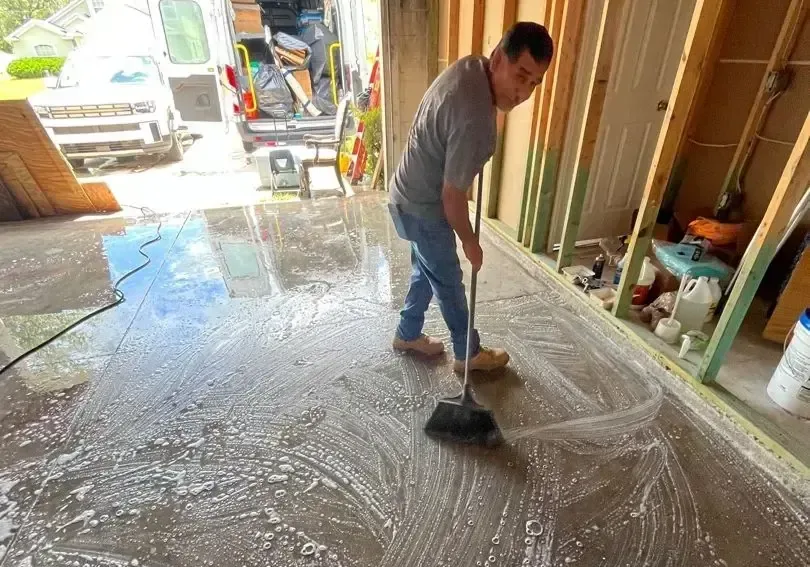
A concrete garage slab dries slowly from the top down, and stored cardboard wicks water up quickly.
Wet cardboard, paper and fabric are removed first, then the slab is washed and dried.
Living areas
If water crosses into a front room, the restoration team tests carpet, pad, wood flooring and the lower wall for moisture.
Materials that were only briefly wet are often dried in place. Materials that soaked through are removed.
What to expect from the cleanup visit
A street flood cleanup usually begins with a walk through, a moisture reading in each wet room and a plan for the order of work.
The response team separates the job into zones, because a garage slab, a hallway carpet and a bedroom wall do not dry the same way.
Dirty water changes the plan. Porous materials such as carpet pad, particle board and soft insulation are removed rather than dried, while hard surfaces are washed and then dried.
- Walk through and moisture mapping of every wet room.
- Removal of water and of materials that cannot be saved.
- Washing and sanitizing of surfaces touched by street water.
- Drying equipment placed and recorded.
- A final reading before equipment is removed.
When the street is dry but the house is not
A flood can look finished when the street clears. The water in the walls, the subfloor and the slab is still there.
The October 5, 2015 water drained to the nearby wash once the inlet was open, which is a good outcome for the street. A house that took water at the same time still needs to be checked, since wet materials hold moisture long after the surface looks dry.
A common mistake is to run a fan and close the door. Without dehumidification and measurement, moisture stays trapped in the lower wall and under flooring, and a musty smell is often the first sign something was missed.
Drying and checking the structure
After the standing water is gone, air movers and dehumidifiers dry the framing, the subfloor and the lower drywall.
The drying team records moisture readings each day and compares them to a dry reference, so the equipment comes out when the readings are back to normal, not when the surface feels dry.
This matters because wet drywall and wood left for a day or two invite mold, and the cleanup becomes larger and more expensive.
- Daily moisture readings on floors and walls.
- Air movers aimed along the lower wall.
- Dehumidifiers to pull moisture out of the air.
- Removal of wet insulation low in the wall when it will not dry.
Keeping the inlet open before the next storm
The 2015 cleanup was simple because the blockage was simple. A little attention at the curb can prevent a repeat.
Residents can keep trash and recycling bins away from the gutter on rain days, clear leaves from the curb with a rake, and avoid sweeping yard waste toward the inlet.
Street runoff losses are handled in two phases: water extraction first, then structural drying until readings are normal.
The full process for this kind of loss is laid out under storm and street flooding cleanup, and the service area list shows the neighboring communities the team covers.
Questions
Is water from a clogged storm drain considered clean?
No. Street runoff carries silt, oil and debris, so it is treated as dirty water and the cleanup includes washing and sanitizing, not just removal.
Should wet carpet from a street flood be saved?
Carpet and pad that sat in street water are usually removed. Hard surfaces such as tile and sealed concrete are normally cleaned and dried.
Can a flooded garage affect the rest of the house?
Yes. Water moves into the wall framing and through door thresholds, so adjoining rooms are checked with a moisture meter.
What should be photographed before cleanup starts?
The street, the water level on walls, the damaged belongings and any visible debris at the drain. These help with the insurance conversation.
How can residents help keep a drain clear?
Keep bins and yard waste away from the curb, rake leaves before rain and report a blocked inlet to the county once it is safe.