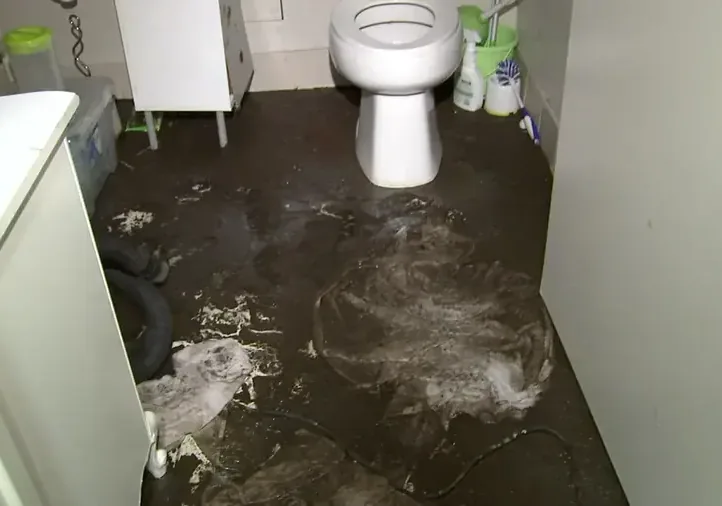
A backup from a toilet, shower or floor drain brings waste water into the house. It is not an ordinary spill, because it carries bacteria and has to be handled with care.
Key takeaways
- Stay out of the affected rooms and keep children and pets away.
- Do not use sinks, toilets or the washer while the backup is active.
- Porous materials such as carpet, pad and drywall touched by sewage are usually removed.
- Cleanup includes sanitizing, then drying, then a moisture check.
- Temple City had 12,216 housing units at the 2020 census, many of them in postwar homes.
What counts as a sewage backup
A sewage backup is waste water that comes back through a drain, toilet or floor drain into the building.
Common causes include a blockage in the pipe on the property, a blockage further along, or heavy use during a storm.
The restoration team treats it as the most contaminated kind of water, since the content is unsafe to touch or breathe.
- Water rising in a tub or shower when a toilet is flushed.
- Gurgling sounds from drains.
- A sewage smell in a bathroom or laundry room.
- Wastewater coming out of a floor drain.
- Several fixtures backing up at once.
Temple City homes and age
Temple City was founded as the Town of Temple on May 30, 1923, and incorporated on May 25, 1960, after the post World War II population boom.
The 2020 census counted 36,494 people and 12,216 housing units. Many homes date to the postwar years, though no claim is made here about pipe materials or who owns a lateral.
First steps
Protect health first. Minimal contact is the rule.
- Stop using water in the house, including toilets and the washer.
- Keep people and pets out of the wet area.
- Do not use a household vacuum on the water.
- Wear rubber boots and gloves if anything must be moved.
- Call a plumber for the blockage and a sewage cleanup team for the room.
What the cleanup team does
The cleanup is done in an order that limits spreading.
The extraction crew removes the liquid with equipment made for contaminated water, and then removes materials that cannot be cleaned.
Removal
Carpet, pad, wet drywall and baseboards are cut out and bagged. Hard surfaces are cleaned and kept.
The cut goes past the visible line of water to reach clean material.
Sanitizing
Floors, walls and framing that stay are cleaned with an antimicrobial product and rinsed where needed.
Odor control follows the sanitizing step.
Causes and where the blockage sits
A backup starts with a blockage. It may be in the pipe inside the house, in the pipe on the property, or farther along.
Because the location decides who fixes it, a plumber with a camera is usually called to find it.
Heavy use, roots, grease and flushed items are common causes, though the cause varies from house to house.
- Grease and food scraps in a kitchen drain.
- Wipes and paper products flushed down the toilet.
- Tree roots entering a pipe.
- A collapsed or offset section of pipe.
- A heavy storm that overloads a drain.
Common mistakes after a backup
The urge to clean up quickly can lead to steps that spread contamination or cause harm.
Mixing cleaning chemicals, running fans through the whole house and walking from the wet area into clean rooms are the usual problems.
Waiting also costs something. The longer waste water sits in carpet and drywall, the deeper the odor and the staining go.
- Using a household vacuum on wet waste.
- Mixing bleach with other cleaners.
- Running fans that push contaminated air into other rooms.
- Tracking boots or socks into carpeted rooms.
- Delaying the call while the water sits.
Why the plumber and the cleanup team both matter
Clearing the blockage stops new waste water from arriving, but it does nothing for the carpet, drywall and subfloor that already took it in.
A cleanup team then removes the contaminated materials, treats what stays and dries the structure. Skipping that stage leaves odor and bacteria behind walls and under floors.
Sharing the plumber's findings with the cleanup team helps. If the blockage was in the pipe on the property, the team knows the source has been fixed before sanitizing begins.
Rooms and materials at risk
Bathrooms and laundry rooms are the usual places, since they have the lowest drains. The water can spread to hallways and bedrooms.
The type of material decides whether it can be saved. Non-porous items can be sanitized, while porous items absorb contamination.
Hard surfaces
Tile, sealed concrete and sheet vinyl are cleaned and kept in many cases.
Grout needs special attention because it can hold contamination.
Soft materials
Carpet, pad, rugs, upholstery and unsealed wood are usually removed.
Drywall touched by sewage is cut out above the water line.
Protective gear and procedure
A cleanup team uses gloves, boots, eye protection and respirators. Plastic sheeting separates the work area from the rest of the home.
Air scrubbers may be used to clean the air during removal.
- Containment with plastic sheeting.
- Extraction of liquid and slurry.
- Bagging of removed material.
- Antimicrobial treatment of surfaces.
- Air scrubbing while work is under way.
What to expect for time and disruption
A cleanup can take a few days when removal, sanitizing and drying are combined. Rooms near the work area may be off limits for a while.
Residents should plan for another place to stay if the bathroom or kitchen is the affected room.
The drying team shares the schedule so the household knows when each phase starts and ends.
After the cleanup
Once readings match a dry reference, the structure can be rebuilt. New drywall, flooring and baseboards go in after the area is dry and sanitized.
A plumber may recommend a follow-up inspection to confirm the blockage is gone.
Drying after sanitizing
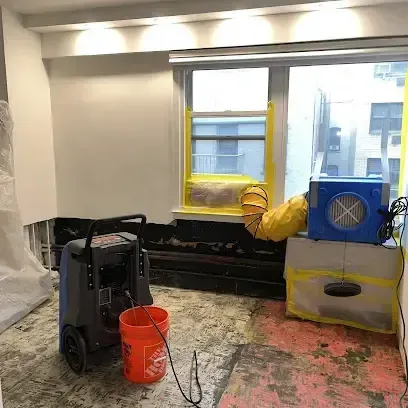
Once surfaces are clean, the drying team places air movers and dehumidifiers and takes moisture readings.
Subfloors and framing that held contaminated water are checked closely. The drying continues until readings match a dry reference.
Wet material left in place for a day or two can grow mold, so the sequence moves without long gaps.
Health and household notes
People with asthma, small children and older adults should stay in another room or location during the work.
Clothing and towels that touched the water should be washed separately and hands washed well. Food items left in the affected area are best thrown away.
The wider process is described under sewage backup cleanup, the drying phase under structural drying, and removal of standing water under water extraction. The service area lists nearby communities the team covers.
Questions
Is it safe to clean sewage with household cleaner?
Small surface cleaning is not enough. Sewage can soak into materials, and a trained team removes and sanitizes them.
Can carpet be saved after a sewage backup?
Usually not. Carpet and pad that touched sewage are removed, while hard surfaces can be cleaned.
Who fixes the blockage?
A plumber clears the blockage. The cleanup team handles the contaminated rooms.
Should the water be turned off?
Stop using fixtures. Water use can push more sewage back into the house.
How is the room confirmed ready?
After sanitizing and drying, moisture readings must match a dry reference.