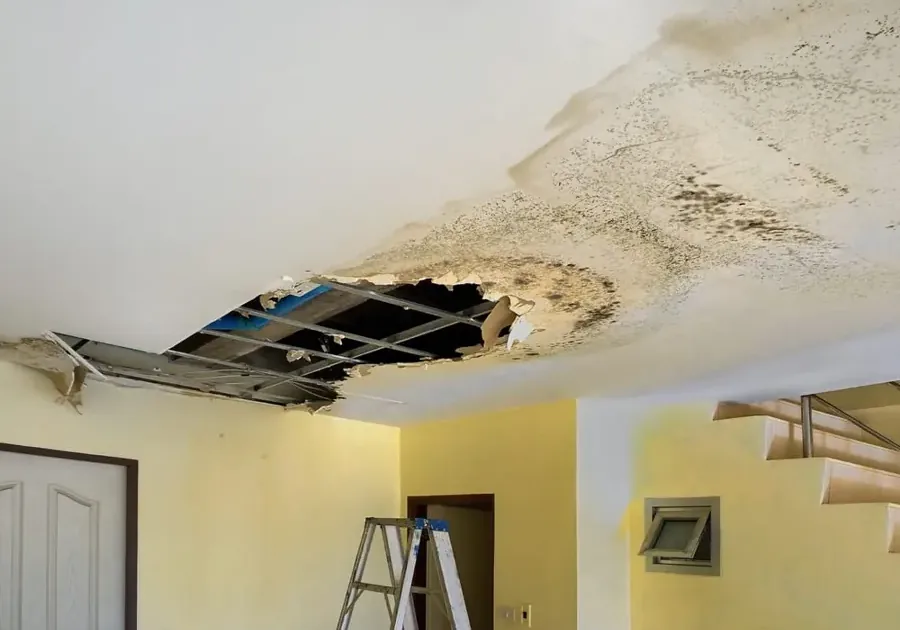
A brown ring on the ceiling or a slow drip from a light fixture often means the leak started in another home. In multi-story buildings, water from one unit finds the units below it.
Key takeaways
- A leak in the unit above is reported to the manager or association as well as to the unit owner.
- Atlantic Times Square has 210 condos on the third through sixth floors above ground-floor shops and restaurants.
- About 44.6% of Monterey Park housing units counted in 2010 were renter-occupied.
- A sagging ceiling should be opened by the pros so water can drain safely.
- Photograph the stain, the damage and any messages exchanged with the neighbor.
Why condo leaks travel
Water follows gravity and the easiest route. In a multi-story building that route is often a plumbing chase, a gap around a pipe or a seam between ceiling and wall.
Atlantic Times Square opened in 2010 with 210 condos on the third through sixth floors above ground-floor shops and restaurants. Buildings like it show how stacked homes share floors, ceilings and shafts.
Monterey Park also has many rentals. The 2010 Census counted 20,850 housing units, with 55.4% owner-occupied and 44.6% renter-occupied.
Common sources in the unit above
Most upstairs leaks come from the same short list of places.
- A washing machine hose or drain that loosens or splits.
- A dishwasher supply or drain connection.
- A toilet supply connector or wax seal.
- A shower pan, tub overflow or a leaking drain.
- A water heater in a closet.
First steps when the ceiling shows water
Speed helps because the water is soaking drywall and insulation while the owner decides what to do.
Protect people and belongings
Move furniture and electronics away from the stain. Place a bucket under any drip and put plastic over items that cannot be moved.
If the ceiling bulges, do not stand under it. A bulge holds water and can drop at once.
Notify the right people
Contact the property manager or the association, then the neighbor above. The shutoff for a building is often outside a single unit.
A renter should also tell the landlord in writing and keep the message.
Document
Photograph the ceiling, the walls and floor below and any damaged belongings. Note when the stain first appeared and how it changed.
What a condo owner or tenant can check
Before the manager arrives, a few checks help narrow down where the water is coming from.
The pattern of the stain often points to the source. A ring directly under a bathroom suggests a toilet, tub or shower, while a streak that runs along a wall suggests a pipe in a chase.
- Note if the stain grows only when a washer, dishwasher or shower runs upstairs.
- Look at whether the stain is wet to the touch or dry and old.
- Check for a dripping light fixture or a vent cover, which can carry water out of the ceiling.
- Turn off the breaker for a leaking light fixture from a dry spot.
- Check if neighbors on the same side also have stains.
Materials that need attention
Different finishes react differently to water from above. The drying team checks each surface rather than treating the room the same way.
Paint and drywall absorb water and swell. Textured ceilings can hide the size of the wet area.
Hardwood and laminate floors below can cup or lift when water runs down the walls.
Drywall and insulation
Wet drywall can be dried in place if the water was clean and the exposure short. Sagging, stained or stained-through board is cut out.
Insulation above the ceiling is removed when it will not dry quickly.
Floors and cabinets
Water on the way down often ends up under a floor or in a cabinet base. The drying team lifts toe kicks and uses meters to see how far it spread.
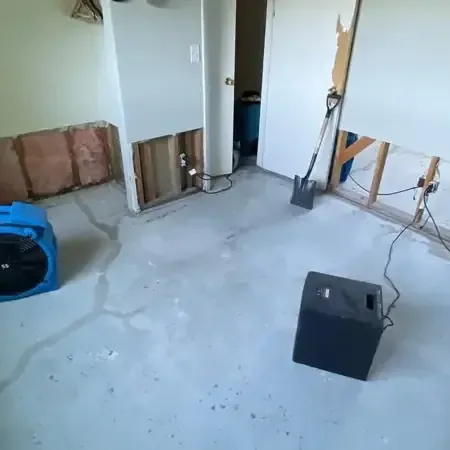
Equipment is placed so air moves under cabinets and along the lower wall.
Working with neighbors above and below
A leak in a stacked building affects several households, so clear communication prevents arguments.
A short written note to the neighbor, with a photo, is better than a conversation at the door. Ask for access to the source so the shutoff can be reached and the cause fixed.
The restoration team can document the damage in each unit, which helps with the claims each household makes.
- Share photos and dates, not blame.
- Ask the manager to shut off water to the affected stack.
- Keep receipts for emergency work.
- Let the drying team access the unit above if a hidden leak is suspected.
Why speed matters in a shared building
Water spreads horizontally as well as down. A leak that runs for a day can reach several ceilings, walls and floors.
Drywall left wet for a day or two can start to grow mold, and cleaning that costs more than drying would have.
What the drying team will not guess
A good team measures instead of guessing. A damp ceiling can be dry a day later, and a dry-looking wall can be wet behind the paint.
Readings in the ceiling, the walls and the floor below show the total pattern, and the plan follows the numbers.
How the ceiling is opened and dried
A trained mitigation team opens a sagging ceiling in a controlled way so water drains into a container, not onto the room below.
The cut is made past the visible stain to reach dry material. Wet insulation is removed, and the framing above is checked with a moisture meter.
- The ceiling is opened at the lowest point of the bulge.
- Wet insulation is bagged and removed.
- Air movers dry the joist space.
- Dehumidifiers pull moisture out of the room.
- Walls below are checked for water that ran down.
Water that ran down the walls
Ceiling water does not always stay in the ceiling. It runs down wall cavities and drips behind baseboards, trim and cabinets.
The drying team uses a moisture meter along the walls and floor in each room. A thermal camera can show cooler wet areas behind paint.
This is why a small stain on the ceiling can lead to damage in a floor or a cabinet well away from the original spot.
Who pays and what to keep
The cause decides the claim. Many condo associations and insurance policies treat damage from a neighbor's appliance differently than damage from the building's own pipes.
Keep photos, repair estimates, the plumber's report and the dates of each message. Hose and supply leaks are covered under appliance and supply hose leaks, and the opening and drying steps fall under ceiling leak water damage.
Other local services sit on the Monterey Park hub, and the wider process is described under ceiling leaks.
Questions
Who is responsible for a leak that comes from the unit above?
It depends on the cause and the building rules. A burst appliance is often the upstairs owner's concern, while a pipe in the building structure may belong to the association.
Is it safe to poke a bulging ceiling to let the water out?
It is better to let a trained team open it in a controlled spot. A bulge can release a large amount of water and plaster at once.
Can the damage be hidden even if the stain is small?
Yes. Water runs along framing and down wall cavities, so a moisture meter is used to find the wet areas.
What should a tenant do first?
Tell the landlord or manager in writing, protect belongings and take photos. Keep every message.
How long should drying equipment run?
Until readings match a dry reference. That is checked on each visit, not guessed from the surface.